Your brand is your promise, but fakes can break that trust. You need a security solution that’s easy to verify but impossible to copy, protecting both your revenue and reputation.
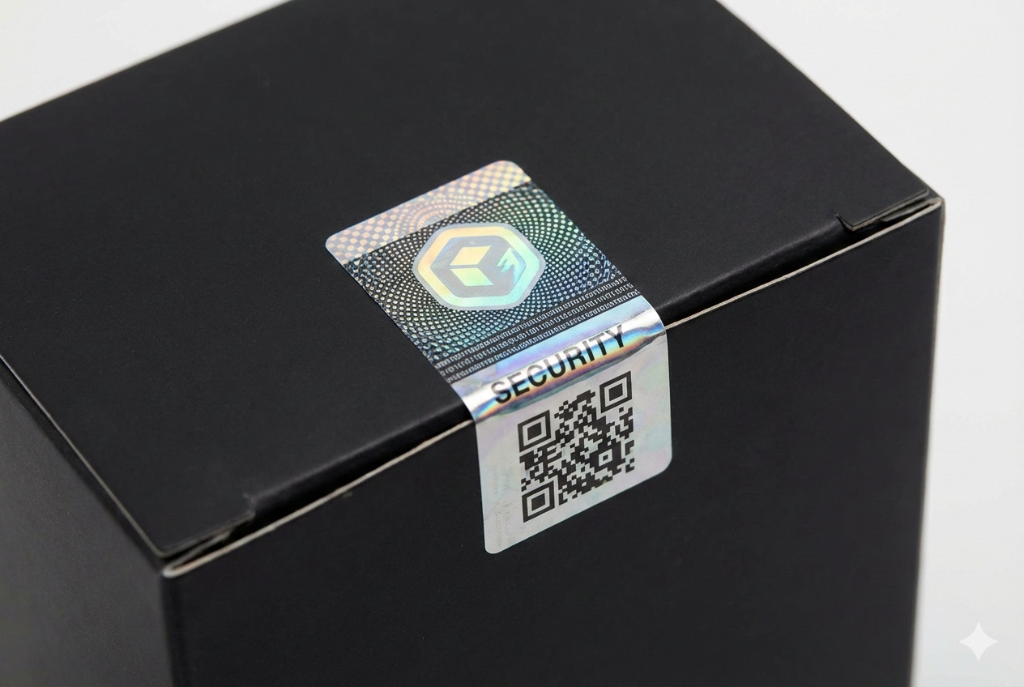
A hologram sticker1 is a three-dimensional image created with lasers and embossed onto a label. It uses microscopic structural patterns, not ink, to bend light and create unique visual effects, making it an extremely effective tool against counterfeiting2.
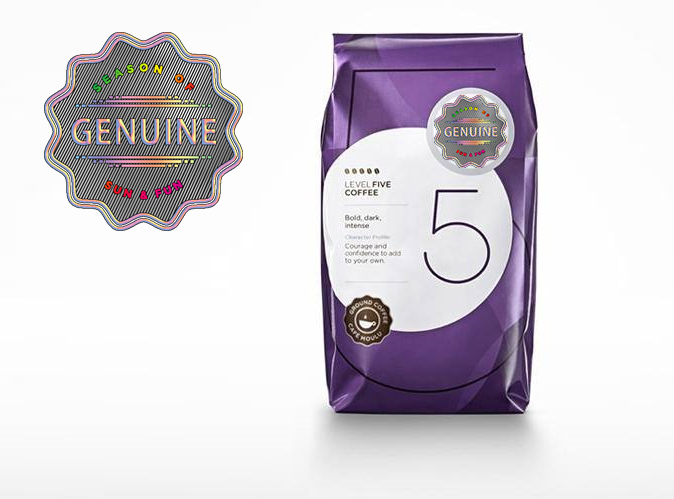
I've seen firsthand how a simple, shiny sticker can make or break a product's security. It looks simple from a distance, but the technology packed into that tiny space is incredibly complex and fascinating. It represents a barrier that counterfeiters simply can't cross without immense resources. But what exactly goes into making one? Let's dive into the science and artistry behind these powerful little security guards. Understanding how they work is the first step to implementing them effectively for your own needs.
How Are These Intricate Holograms Actually Made?
You've seen these complex, shimmering images, but the creation process can feel like a mystery. Without understanding the basics, it's hard to appreciate why they are so secure.
Hologram stickers are made using a high-precision process3 called optical lithography4. A master hologram is first created with lasers on a light-sensitive plate. This master is then used to emboss the microscopic holographic pattern5 onto rolls of film, which are then finished into final stickers.
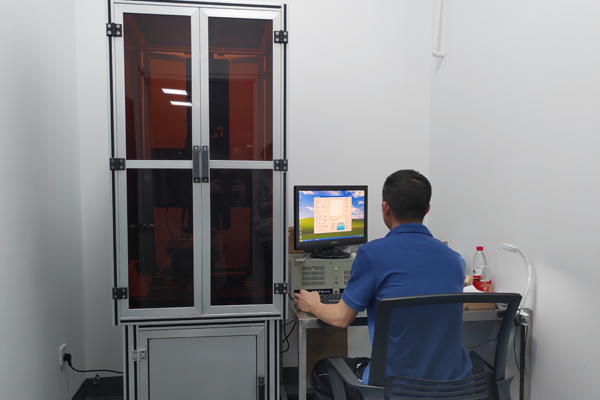
The journey of a hologram sticker1 begins with a step called "master origination6." This is where the magic really happens. In my experience, this is the most critical and skill-intensive part of the entire process. We use specialized lasers to record a 2D or 3D image onto a photosensitive glass plate. A single laser beam is split in two; one part illuminates the object or digital image, and the other, the reference beam, is aimed directly at the plate. The interference pattern created where these two beams meet is what gets recorded. This pattern is incredibly detailed, with features smaller than a wavelength of light. Once the master is created, we can't just use it to make stickers directly. We use an electroforming7 process to create a durable metal copy, usually made of nickel. This nickel "shim" is what we use for mass production. It's mounted onto rollers and used to emboss the holographic pattern5 onto thin polyester or BOPP film under high heat and pressure. It’s like a very, very precise rubber stamp for light itself.
| Production Stage | Key Action | Purpose |
|---|---|---|
| 1. Master Origination | Lasers record an interference pattern on a plate. | To create the original, one-of-a-kind hologram design. |
| 2. Electroforming | A nickel copy (shim) of the master is created. | To make a durable tool for mass production embossing. |
| 3. Embossing | The nickel shim presses the pattern onto film. | To transfer the holographic structure to the sticker material. |
| 4. Finishing | The film is metallized, coated with adhesive, and cut. | To create the final, ready-to-use hologram sticker1s. |
What Specific Security Features Make a Hologram So Hard to Copy?
A shiny sticker looks good, but is it really providing protection? Many simple "holographic" patterns can be faked, leaving your documents and products vulnerable to sophisticated counterfeiters.
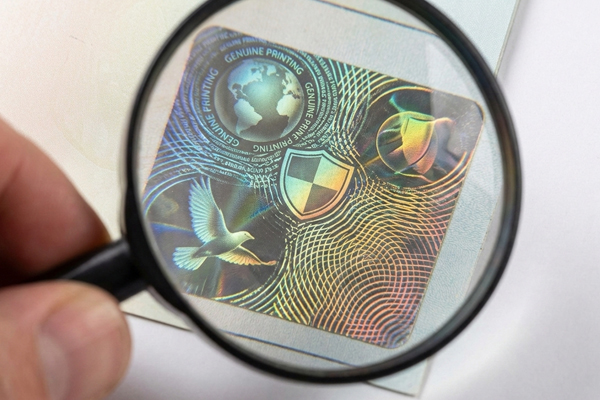
A true hologram is hard to copy because it combines multiple, layered security features8 that are created with specialized equipment. These include 3D depth effects, hidden nanoscale microtext, images that change with viewing angle (isomeric effects), and encrypted Moiré patterns.
 ![microntext hologram sticker]
When we design a security hologram for a client, like a government agency needing tax stamps, we don't just rely on one feature. We layer them. This is the core principle of effective security. The most obvious feature is the 3D Depth Effect9. This makes some parts of the image appear to float above the surface while others seem recessed deep inside. This isn't a simple visual trick; it's a genuine multi-layered recording that a scanner or photocopier cannot capture. For higher security, we embed Nanoscale Microtext10. This is text so small—often just a few microns high—that it’s completely invisible to the naked eye. You need a microscope to read it, and it confirms authenticity at a forensic level. Another powerful feature is the Isomeric or Kinetic Effect, where the image seems to move or flip to a different image as you tilt the sticker. This is achieved by recording two or more images into the same holographic space at different angles. Finally, for top-tier security, we can use Moiré Encryption11, a hidden pattern that is only revealed when a special, corresponding overlay lens is placed on top of it. A counterfeiter would need to replicate not only the sticker but also the unique decoder key.
| Security Feature | Description | How It Stops Counterfeiters |
|---|---|---|
| 3D Depth Effect9 | Image elements appear on different visual planes. | Cannot be reproduced by 2D scanners or printers. |
| Nanoscale Microtext10 | Text invisible to the naked eye, requires magnification. | Extremely difficult to etch without specialized lasers. |
| Isomeric Effect12 | Image appears to move or change when tilted. | Requires complex, multi-angle laser recording systems. |
| Moiré Encryption11 | Hidden image revealed only with a special decoder. | The counterfeiter must replicate both the sticker and the key. |
Why Do Holograms Have Such Vibrant Colors Without Using Any Ink?
You need a label that's eye-catching, but traditional printing inks can be a security risk. Inks can fade, get scratched, or even be chemically removed by determined counterfeiters.
Holograms create their brilliant, rainbow-like colors without any ink through a process called diffraction. The surface has microscopic grooves that split white light into its component colors, just like a prism. The color is part of the structure, not a coating.
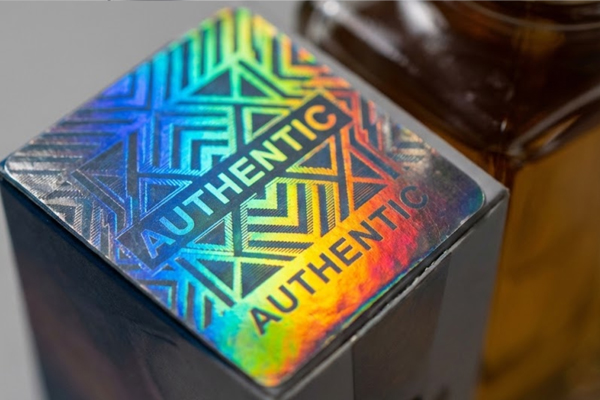
I always find it amazing to explain to clients that the beautiful colors they see on our holograms aren't printed. They are literally created by the physics of light. We call this "structural color13." The embossing process creates thousands of tiny grooves per millimeter on the sticker's surface. When ambient white light hits these grooves, it is bent and split into the full spectrum of colors—red, green, blue, and everything in between. This is the same principle that creates the rainbow you see on the surface of a CD or in an oil slick on water. Because the color is generated by the physical structure, it has huge advantages over ink. First, it’s permanent. The colors will never fade from sun exposure. Second, it's a built-in security feature. A scanner or photocopier can't replicate this light-bending effect; it will only capture a flat, dull version of the image, immediately signaling a fake. When you tilt a real hologram, the colors shift and shimmer. This dynamic quality is a clear and instant sign of authenticity for anyone to see, no special tools required. This makes it a perfect overt security feature for ID cards, certificates, and high-value product labels.
Conclusion
Hologram stickers are more than just shiny labels. They are high-tech security tools made with complex processes and layered features, offering unbeatable protection for your documents and products.
Explore the fascinating technology behind hologram stickers and their role in product security. ↩
Understand the impact of counterfeiting on trust and revenue in various industries. ↩
Understand the importance of precision in creating secure holograms. ↩
Learn about the advanced techniques used in creating secure holograms. ↩
Explore the various designs and their applications in security. ↩
Discover the critical first step in creating unique holograms. ↩
Find out how this process creates durable tools for mass production of holograms. ↩
Discover the layered security features that protect against counterfeiting. ↩
Explore how this feature enhances security and visual appeal in holograms. ↩
Learn about this hidden security feature that confirms authenticity. ↩
Discover how this advanced technique protects against counterfeiting. ↩
Understand how this dynamic feature adds an extra layer of security. ↩
Learn about the science behind the vibrant colors of holograms. ↩