
Worried about fake diplomas1 devaluing your university's reputation? Counterfeit certificates are a growing problem, making it hard to trust academic credentials. We offer a solution to protect your institution's integrity.
To ensure authenticity, you must print diplomas on secure paper2 with features like custom watermarks3, UV invisible ink4, and holographic foils5. These elements are very difficult to replicate, providing a strong defense against forgery and protecting the value of your degrees.
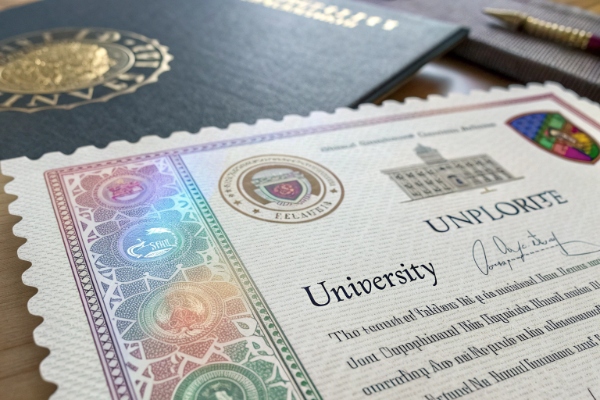
These features are just the beginning. Protecting a document as important as a diploma requires a multi-layered approach. Let's explore why this is so critical and what specific technologies you can use. You need to understand the full scope of security printing to make the best choice for your institution.
Why is Anti-Counterfeit Diploma Printing So Crucial Today?
Is the rise of diploma mills6 and forgeries threatening your institution's credibility? Fake degrees can damage your brand. Protect your hard-earned reputation with secure printing solutions that stand up to scrutiny.
Anti-counterfeit printing is crucial because it verifies the authenticity of academic achievements. This protects the university's reputation, upholds the value of its degrees, and prevents fraud in the job market, ensuring only genuine graduates benefit from their qualifications.
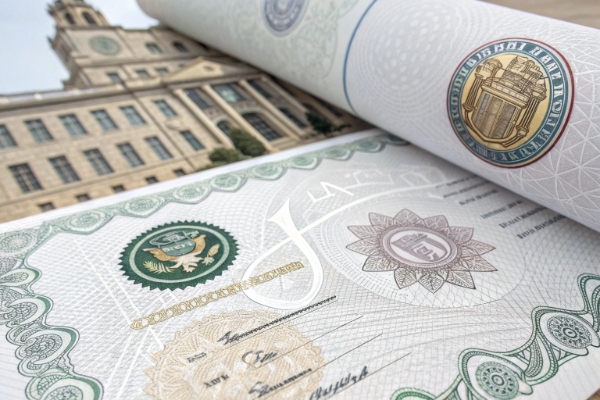
I remember a client from a prestigious university who came to us in a panic. They discovered several high-quality forgeries of their diplomas circulating online. It was a serious wake-up call for them and a stark reminder of the threats modern institutions face. Fake diplomas are more than just pieces of paper. They represent a serious threat. When someone uses a fake degree to get a job, they might not be qualified. This can lead to poor performance, safety risks, and damage to the employer's business. For your university, it means your name is associated with fraud. It dilutes the value of the hard work your real students put in. Your university's reputation is one of its most valuable assets. Every diploma you issue is a testament to your academic standards7. By investing in secure printing, you send a clear message. You show that you value your students' achievements and are committed to integrity.
| Risk of Forgery | Impact on Institution |
|---|---|
| Brand Damage | Loss of trust from students, employers, and the public. |
| Devalued Degrees | Legitimate graduates find their degrees are less respected. |
| Legal Liability | Potential legal issues if unqualified individuals cause harm. |
| Administrative Burden | Time and resources spent verifying credentials and dealing with fraud. |
What Are the Essential Security Features for a University Diploma?
Are your current diplomas easy to copy with a standard printer? Basic paper and ink offer no protection against determined forgers. You need advanced, layered features to stop them in their tracks.
Essential security features include custom watermark paper, UV invisible ink4 that appears under blacklight, and multi-tonal holographic foils5. These layered elements create a document that is visually distinct and extremely difficult to counterfeit accurately, ensuring immediate and reliable verification.
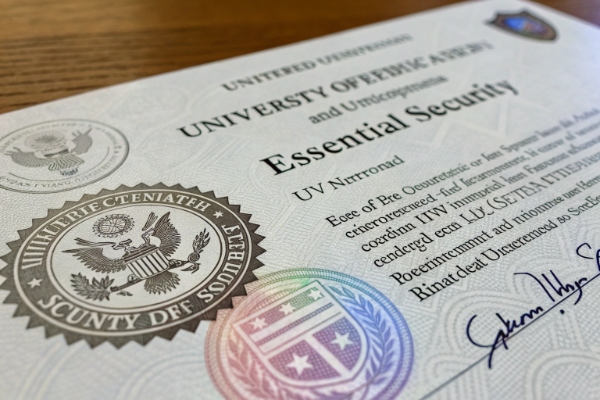
Everything starts with the paper. We don't use regular office paper. Our security paper is specially made and is the foundation of a secure document. It often contains colored fibers embedded within the sheet, which you can see but not feel. More importantly, we create custom watermarks3. This means your university's logo can be embedded directly into the paper pulp during manufacturing. It's not printed on top; it's part of the paper itself. This is a classic and highly effective security feature that is nearly impossible for counterfeiters to replicate without industrial equipment.
Next, we use special inks. Some are overt, meaning you can see them. But the real magic is in the covert inks. We use UV invisible ink4 to print logos, text, or patterns. They are completely invisible to the naked eye under normal light. But when you shine a UV light on the diploma, they glow brightly in a specific color. This is a simple and quick way for anyone to check for authenticity.
Holograms are a powerful visual deterrent. We can apply a holographic foil patch or a full overlay. These aren't just shiny stickers. Our holograms have depth and complexity, often with multiple layers of images or microtext8 hidden within them. When you move the certificate, the image shifts and changes. A simple photocopier can't capture this 3D effect, making it an obvious sign of a fake.
How Do You Customize Academic Certificates to Prevent Tampering?
Worried that someone could alter a real diploma to change a name or grade? A genuine certificate can still be a target for fraud. You must secure it against tampering and alteration.
To prevent tampering, use features like microtext8, which is too small to be read by the naked eye, and unique serial numbers9 linked to a database. You can also use tamper-evident seals10 or foils that are destroyed if someone tries to remove them.
Sometimes the best security is the one you can't see easily. We use microtext8 printing, which involves printing text so small it looks like a simple line to the naked eye. You need a magnifying glass to read it. We can hide the university's name or a specific phrase like "GENUINE DOCUMENT" within the border designs or guilloche patterns. A forger trying to replicate the design with a standard scanner and printer will just produce a blurry, unreadable line. This tiny detail is a clear giveaway of a counterfeit document.
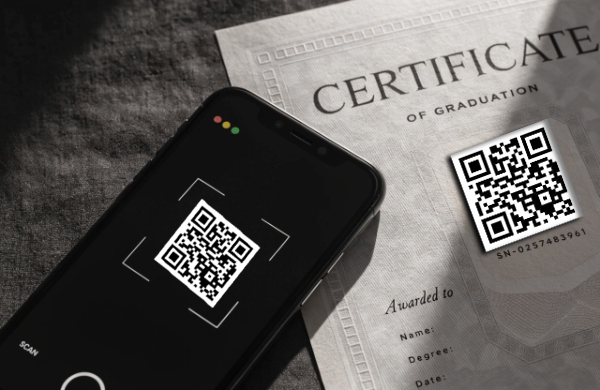
Every single diploma or transcript should be unique and traceable. We achieve this with unique serial numbers9. But we go a step further. We can link each serial number to a secure database containing the graduate's information. This creates a powerful digital verification system11. An employer can go to a secure portal, enter the serial number, and confirm the graduate's name and date of issue match the physical document. This digital layer of security makes forgery much more difficult.
What if someone tries to change the name on a real diploma? We use tamper-evident features to prevent this. This can be a special holographic seal that self-destructs if someone tries to peel it off, leaving behind a "VOID" pattern. We can also use chemical reaction coatings on the paper itself. If someone tries to use chemical solvents to erase the ink, the paper will become visibly stained, showing clear evidence of tampering.
What Should You Look for in a Secure Diploma Printing Partner?
Choosing the wrong printer could expose your institution to massive risk. How do you find a partner you can trust with your most sensitive documents when your reputation is on the line?
Look for a partner with extensive experience, especially with government-level projects12. They should offer a one-stop customization service13, from design to delivery, and have a strict confidentiality and traceability system in place to protect your data and documents.
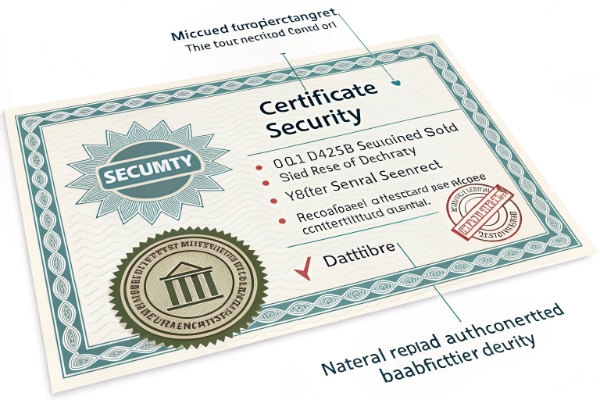
When it comes to security printing, you can't afford to work with a newcomer. A reliable partner must have years of proven experience. For over 15 years, we have supplied secure documents to government agencies, banks, and universities. I recall working on a large project for the Bolivian government. The level of security and trust required was immense. This experience taught us how to manage complex projects and maintain absolute confidentiality from start to finish. You want a partner who has been tested and has a track record of success with high-stakes documents.
Managing multiple vendors for design, paper, printing, and holograms is a nightmare. It creates security gaps and logistical headaches. A true partner provides a one-stop service. We handle everything. We start with the initial design consultation, create the security feature layout, produce the documents, perform strict quality control14, and manage secure international shipping15. This integrated process ensures consistent quality and tight security at every single step.
| Key Qualities of a Printing Partner | Why It Matters |
|---|---|
| Government-Level Experience | Proves they can handle high-stakes, confidential projects. |
| One-Stop Customization | Simplifies your process and closes potential security gaps. |
| Strict Confidentiality System | Protects your institution's data and prevents document leaks. |
| Long-Term Cooperation Focus | Shows they are a partner invested in your success, not just a vendor. |
Conclusion
Securing your academic certificates protects your reputation and your students' futures. By layering multiple security features, you create diplomas that are truly worthy of your institution's prestige and integrity.
Understanding the effects of fake diplomas can help institutions take proactive measures to protect their reputation. ↩
Learn about secure paper features that enhance diploma authenticity and deter forgery. ↩
Discover how custom watermarks can enhance the security and authenticity of academic documents. ↩
Find out how UV invisible ink adds a layer of security to diplomas, making them harder to forge. ↩
Learn how holographic foils provide visual deterrents against forgery and enhance document integrity. ↩
Explore the impact of diploma mills on the value of legitimate academic credentials. ↩
Understand the connection between maintaining academic standards and securing diplomas. ↩
Discover the role of microtext in enhancing the security of academic certificates. ↩
Find out how unique serial numbers can help verify the authenticity of diplomas. ↩
Learn how tamper-evident seals protect diplomas from unauthorized alterations. ↩
Explore how digital verification systems can streamline the authentication process for academic credentials. ↩
Understand the standards and practices necessary for secure printing in high-stakes environments. ↩
Discover how a one-stop service can simplify the printing process and enhance security. ↩
Learn about the importance of quality control in ensuring the integrity of printed documents. ↩
Explore best practices for ensuring the safe delivery of sensitive academic documents. ↩