Fake transport documents1 threaten your authority's integrity and public safety. This fraud undermines revenue and control. Our premium security printing2 provides a complete, compliant, and durable solution.
To secure road transport documents, combine strict adherence to government standards with multiple physical anti-counterfeiting features like OVI ink3 and UV fibers4. Integrate digital verification with QR codes5 and optional chips, and ensure production happens in a secure, confidential environment6 from start to finish.
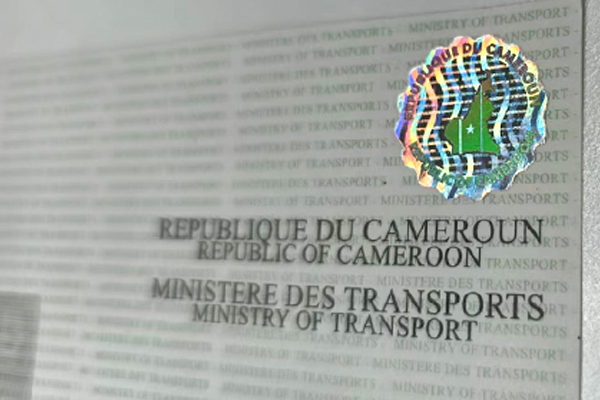
These features are just the beginning of a truly secure document. I remember working with a transport authority that faced a major counterfeiting ring. Their old permits were easy to copy with a high-end printer. It was causing chaos. We helped them overhaul their entire system with the methods I'm about to show you. Let's break down how we achieve this level of security, step-by-step. It is a process we have perfected over more than 15 years of serving government clients. This is how you build a document that nobody can fake.
How do we guarantee compliance with ministry-issued standards?
Standards from a Ministry of Transport are strict and non-negotiable. Any deviation can invalidate official documents and create serious legal problems. We ensure every document we produce is 100% compliant.
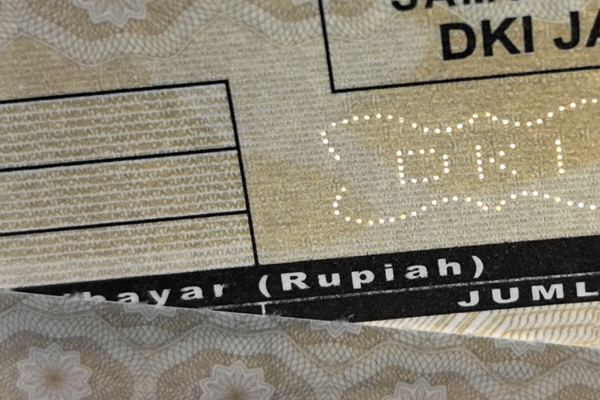
We guarantee compliance by programming our production lines to the exact specifications for size, weight, and layout. Our design team meticulously creates dedicated anti-counterfeiting patterns7, including microtext8 and guilloche9, that meet all government requirements for visual security and copy-resistance.
When a government agency, like the Ministry of Transport, gives us a new project, the first thing we do is analyze their standards. We don't just read them; we translate them into technical specifications for our production line. This is a critical step. It ensures every single document is perfect.
Precision in Physical Specifications
Every detail matters. The size, weight, and even the thickness of the paper must be exact. Our machines are calibrated to these precise requirements. For example, if a permit must be 85x54mm and weigh exactly 5 grams, that is what we produce. There is no room for error. We learned this from our long-term work with government bodies, including the Bolivian government. Their requirements are incredibly detailed, and our ability to meet them every time is why they trust us. This precision makes it harder for counterfeiters. They often use standard paper stock that fails a simple weight or thickness test.
The Art and Science of Anti-Counterfeiting Patterns
The visible design is your first line of defense. We create complex patterns that are very difficult to copy.
| Feature | Description | Anti-Counterfeit Benefit |
|---|---|---|
| Guilloche Lines | Fine, intricate, and interlacing geometric lines. | Standard scanners and copiers cannot capture the detail, resulting in a blurry or distorted mess. |
| Microtext | Extremely small text, often hidden within a line or border. | It appears as a solid line when photocopied. You need a magnifying glass to read it, proving authenticity. |
| Floral Designs | Custom, complex floral or symbolic patterns unique to the authority. | These unique designs are hard to replicate from scratch and act as a quick visual verification point. |
These patterns are not just decorative. They are functional security features designed to fail when someone tries to copy them. This makes it easy for an official to spot a fake with just a quick look.
What physical security features make a document truly counterfeit-proof?
Counterfeiters are getting smarter every year. Basic security features are no longer enough to stop them. Their fake documents can look real to the untrained eye, creating huge risks.
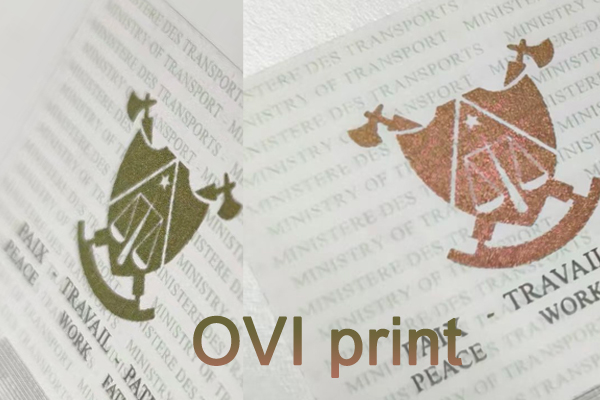
We make documents counterfeit-proof by layering multiple physical technologies. This includes Optical Variable Ink (OVI)10 that changes color, invisible fluorescent fibers visible only under UV light, and a special scratch-resistant coating11 for extreme durability. These features are nearly impossible to replicate.
A truly secure document is like a fortress with many layers of defense. If a counterfeiter gets past one layer, another one stops them. We use a mix of security features that are easy to see (overt) and some that are hidden (covert).
Level 1: Overt Security for Quick Checks
These are features anyone can check without special tools. The most effective is Optical Variable Ink, or OVI. I've seen inspectors' faces light up when they see it for the first time. You tilt the document, and the ink changes color, maybe from green to purple. A color copier cannot fake this effect. It prints a single, flat color. It’s a simple, fast, and powerful way to confirm a document is genuine. Holographic patches work in a similar way. They provide a 3D effect that is impossible to photocopy.
Level 2: Covert Security for Deeper Verification
Covert features are hidden from the naked eye. They require a simple tool like a UV light, which most enforcement officers already carry. We embed fluorescent anti-counterfeiting fibers12 directly into the paper pulp during production. Under normal light, the paper looks normal. But under a UV light, these fibers glow brightly in different colors. We can also print invisible patterns or text using UV ink. A fake document will look blank under the UV light, instantly exposing the fraud. These hidden features are a counterfeiter's nightmare.
Built for the Real World: Durability
Road transport documents are not handled gently. They are kept in trucks, exposed to moisture, and checked frequently. A standard paper document would fall apart in weeks. That is why we apply a special scratch-resistant and water-resistant coating. This lamination process protects the document from tearing, water damage, and general wear. It ensures the security features remain intact and the document stays readable for its entire life. A durable document is a secure document.
How can digital verification streamline inspections and enhance security?
Roadside inspections can be slow and prone to human error. Verifying a document's authenticity on the spot is a major challenge. This inefficiency costs valuable time and can let fakes slip through.
Digital verification streamlines security by adding a unique, encrypted QR code13 to each document. Officers can scan the code to instantly verify its authenticity against a secure online database. For even faster checks, we can embed NFC or RFID chips14 for contactless reading.
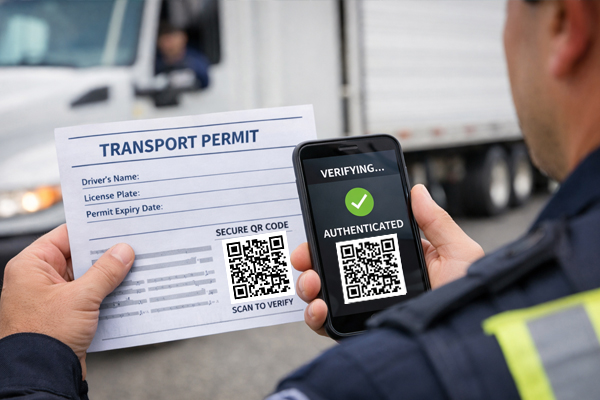
Physical security is essential, but adding a digital layer takes security to a whole new level. It connects the physical document to a secure, live database. This closes loopholes that counterfeiters love to exploit.
Scan-to-Verify: Instant and Secure
We can print a unique, encrypted QR code13 on every single document. This is not just a link to a website. It contains secure data that, when scanned by an authorized app, connects directly to the Ministry of Transport's database. The app can instantly display the official record for that permit: the vehicle details, the operator's name, and the expiration date. If a counterfeiter copies a QR code from a real permit, it won't work on another vehicle. If they create a fake QR code, it won't link to the secure database. This "one certificate, one code" system makes verification instant, accurate, and almost foolproof.
The Next Level: Embedded Smart Chips
For maximum efficiency, we can embed smart chips directly into the documents. These can be industrial-grade NFC or RFID chips14, similar to those in modern ID cards or passports.
| Technology | How It Works | Best For |
|---|---|---|
| QR Code | Officer scans with a smartphone camera. | Low-cost, universal solution requiring only a smartphone app. Great for widespread use. |
| NFC/RFID Chip | Officer uses a dedicated reader for a contactless "tap-to-read". | High-speed, high-security checkpoints. Ideal for busy ports, border crossings, or annual inspection centers. |
An NFC chip allows for a simple tap with a smartphone to read the data. An RFID chip can be read from a greater distance by a dedicated reader. This technology dramatically speeds up inspections. An officer can verify a document in seconds without even taking it from the driver. It reduces traffic delays and allows officers to check more vehicles. This digital integration is the future of secure document management.
Why is an end-to-end confidential production process so critical?
The biggest security risk can come from inside the production process itself. Unsecured data, stolen blank documents, or even production waste can be used to create perfect fakes. This undermines the entire system.
A confidential production process is critical because it prevents leaks from the source. We use 24/7 monitored workshops and closed-loop management15 for all materials. All personalized data is protected with military-grade encryption16, guaranteeing total security from design to delivery.
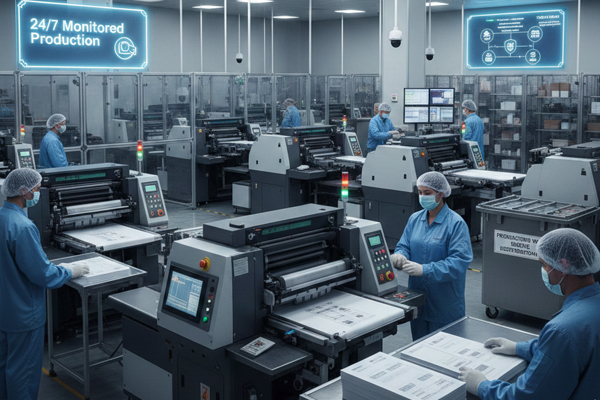
You can have the best security features in the world, but if your production process is not secure, you have a weak link. We treat the production of secure documents with the same seriousness as printing money. Our clients, who are government agencies, demand this.
A Fortress of Production: Closed-Loop Management
Our entire production facility is a secure zone. Access is tightly controlled. The workshops are monitored by cameras 24 hours a day. We manage the entire process in a closed loop. This means we have full control and traceability from start to finish.
- Secure Material Storage17: All security paper, inks, and holograms are stored in a locked, monitored vault.
- Controlled Production: We track the exact number of sheets used for each job.
- Waste Destruction18: Every single scrap of paper, misprint, and used printing plate is accounted for and destroyed on-site through shredding and incineration. Nothing leaves our facility. This strict system ensures that no materials can be stolen and used to create unauthorized documents.
Protecting Privacy19: Military-Grade Data Security
Transport documents contain sensitive personal and business data. Protecting this information is a top priority. When a client sends us the data for printing (like names, license numbers, etc.), that data is immediately protected. We use military-grade encryption16 to secure all data, both when it is being transferred to us and while it is in our system. The data is only decrypted at the last possible moment, right at the printing machine. After the job is complete, the data is securely wiped from our systems according to a strict protocol. This guarantees that the private information of citizens and businesses is never at risk of being leaked. Our clients trust us because we protect their documents and their data.
Conclusion
We combine compliance, layered physical and digital security, and confidential production. This ensures your road transport documents are completely secure, durable, and trustworthy for your authority's needs.
Understanding the risks of fake transport documents is crucial for maintaining authority integrity and public safety. ↩
Learn how premium security printing can provide a complete, compliant, and durable solution for secure documents. ↩
Discover how Optical Variable Ink (OVI) changes color to prevent counterfeiting and ensure document authenticity. ↩
Explore how invisible fluorescent fibers visible under UV light enhance document security against counterfeiting. ↩
Find out how QR codes can streamline inspections and provide instant verification of document authenticity. ↩
Learn why a secure production environment is critical to prevent leaks and ensure document integrity. ↩
Understand how intricate patterns like guilloche lines and microtext prevent document forgery. ↩
Discover how microtext, which appears as a solid line when photocopied, adds a layer of security to documents. ↩
Explore the use of guilloche patterns in documents to prevent counterfeiting and ensure authenticity. ↩
Learn about OVI, a color-changing ink that provides a simple and powerful way to confirm document authenticity. ↩
Understand how a scratch-resistant coating protects documents from wear and tear, ensuring longevity. ↩
Learn how these fibers glow under UV light, making it easy to spot fake documents. ↩
Explore how encrypted QR codes connect documents to a secure database for instant verification. ↩
Discover how embedded smart chips allow for contactless reading and fast verification of documents. ↩
Learn how closed-loop management ensures full control and traceability in secure document production. ↩
Find out how military-grade encryption secures sensitive data during document production and transfer. ↩
Understand the importance of storing security materials in a locked, monitored vault to prevent unauthorized access. ↩
Learn how shredding and incinerating production waste prevents unauthorized use of materials. ↩
Explore the measures taken to protect sensitive personal and business data during document production. ↩