Forged certificates devalue your institution and can cause serious damage. Simple copies look real at first glance, but special paper makes fakes obvious and protects your reputation.
Security paper protects certificates by embedding features that are difficult or impossible for counterfeiters to replicate. These include multi-tone watermarks1s](https://genuine-printing.com/security-paper-bulk-procurement-roi/)%%%FOOTNOTE_REF_2%%%, security threads3, invisible fluorescent fibers4, and chemical coatings5 that react to any tampering attempts, making forgeries easy to spot.
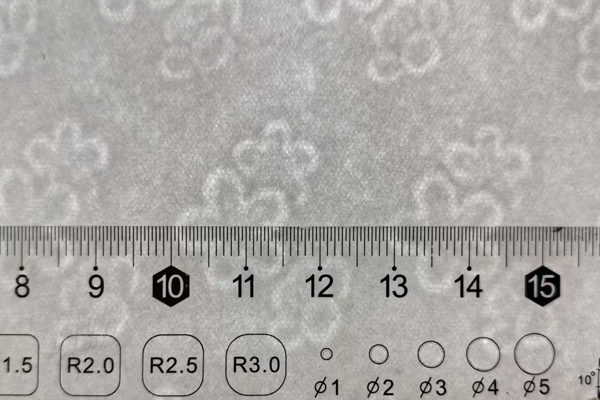
These security features are not just printed on the surface. They are built into the very structure of the paper during its creation. This integration is what makes them so effective. It's a fundamental difference that forgers struggle to overcome. In my 15 years of helping governments and universities secure their documents, I've seen that a layered approach is always the best defense. Let's explore each of these layers and see how they work together to create a document that is incredibly difficult to fake.
How Do Watermarks and Security Threads Make Paper Instantly Verifiable?
A fake document can look perfect at first glance. This quick deception can lead to huge financial or reputational losses. You need a way to check authenticity in seconds.
Watermarks are visible when held to light, and security threads3 are woven directly into the paper. Both are extremely difficult to replicate with standard printers or copiers. They provide a fast and reliable first-line check for authenticity that anyone can perform.
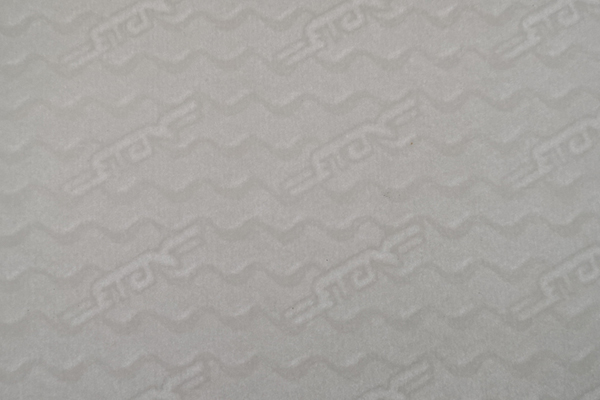
These two features are classic elements of security paper for a reason: they are simple to verify but hard to fake. I remember a client who received a forged document. The forger tried to imitate the watermark by printing a faint gray logo. But when my client held it to the light, the fake mark looked flat and dull. A real watermark has depth and varying tones. It's a subtle but crucial difference. These built-in features are your first and fastest line of defense against fraud.
The Anatomy of a True Watermark
A true watermark is not printed on the paper. It's created during the paper-making process. A special tool called a dandy roll presses a design into the wet paper pulp. This process thins or thickens the paper in specific areas. When you hold the finished paper up to the light, the thinner areas appear brighter and the thicker areas appear darker. This creates the image. We can create multi-tone watermarks1 with complex, portrait-level detail. Because it's a physical part of the paper's structure, it cannot be copied by a scanner or a printer. A forger can only try to imitate it with ink, which will never look the same.
Security Threads: A Woven Defense
Security threads are thin ribbons made of plastic or metal that are woven into the paper. You can have a few different types.
- Embedded Threads: These are completely buried inside the paper and you can only see them when you hold the document up to a light source.
- Windowed Threads: This is a more advanced option. The thread is woven so it appears on the surface at regular intervals. It looks like a dashed metallic line on the front. When held to the light, it becomes a solid line. We can even add microprinting on the thread itself, like your institution's name, which is only visible with a magnifying glass.
| Feature | Verification Method | How it Stops Forgers |
|---|---|---|
| Watermark | Hold paper to a light source | Cannot be scanned or copied; part of the paper's structure. |
| Security Thread | Hold paper to a light source; look for windowed dashes | Difficult to weave into fake paper; adds another layer of complexity. |
What Makes Invisible Fibers and Chemical Coatings a Forger's Nightmare?
Scammers don't just create new fakes; they also try to alter genuine documents. A changed name, grade, or date on a real certificate can create a very convincing fake.
Invisible fibers glow under UV light, a feature standard copiers cannot reproduce. Chemical coatings cause the paper to stain or show a "VOID" message if someone tries to erase or alter text with chemicals, providing clear, irreversible evidence of tampering.
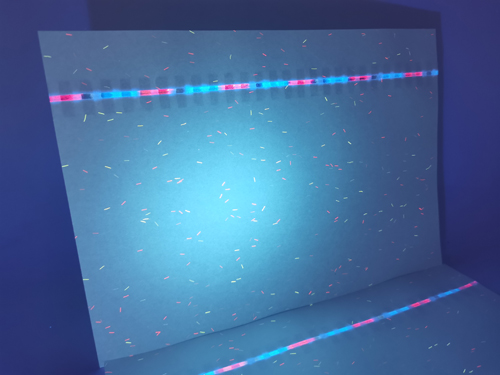
These are the covert security features. They are designed to catch a forger in the act of either creation or alteration. I once worked on a project for a university that was having issues with transcript fraud. A student had tried to use a chemical solvent to erase a low grade. On normal paper, they might have succeeded. But our security paper immediately produced a large brown stain in that spot. The tampering was obvious, the student was caught, and the university’s academic integrity was protected. It is this reactive, defensive quality that makes the paper itself an active part of your security system.
The Power of Invisible Fibers
During the paper manufacturing process, we mix in tiny, thread-like fibers. These fibers are completely invisible under normal lighting conditions. The paper just looks like plain white or cream paper. However, when you place the document under an ultraviolet (UV) or "black" light, these fibers instantly glow, usually in bright colors like blue, red, or yellow. We can even use fibers that glow in multiple colors. Since forgers almost never have the industrial equipment to make paper pulp and mix in their own custom fibers, this becomes an incredibly simple and effective verification test. All you need is a small, inexpensive UV light to confirm the document is genuine.
The Unforgiving Science of Chemical Reaction
To protect against alteration, we apply a special, invisible coating to the paper's surface. This coating is designed to be sensitive to the types of chemicals forgers use to remove ink, such as bleaches, solvents, or other oxidizers. If someone tries to use one of these agents on the document, the coating reacts instantly. This reaction causes a visible stain, smudge, or sometimes a word like "VOID" or "UNAUTHORIZED" to appear on the paper. This change is permanent. It provides immediate and undeniable proof that someone has tried to tamper with the document. It makes altering a certificate without leaving a trace completely impossible.
Why Are Holograms and Special Inks a Crucial Layer of Security?
Today's forgers can use sophisticated printers and scanners. A simple printed document, even on good paper, might not be enough to stop a determined counterfeiter. A good fake can pass a casual inspection.
Holograms are complex, multi-layered images that are extremely difficult to reproduce. Special inks, like color-shifting or UV invisible ink6, have dynamic properties that standard CMYK printers cannot replicate, providing both overt and covert layers of security.
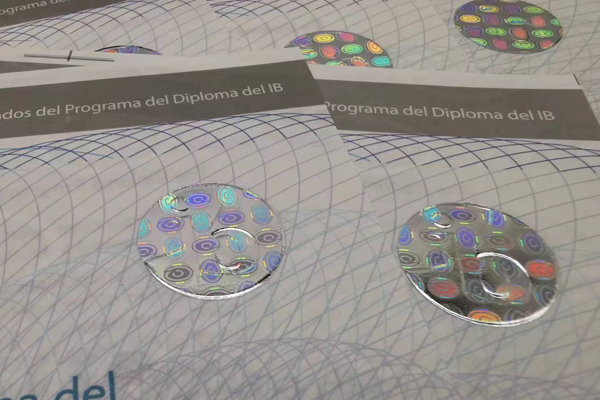
Think of these features as the high-tech, dynamic layer of your document's security. They are not static. They change and react to light and angle, which is something a flat, scanned copy can never do. When we design a certificate, we are not just adding a shiny sticker. We are integrating a complex optical device. For example, a hologram we produce might contain hidden microtext7 and have a unique kinetic effect that is registered to the client. A forger can buy generic, glittery stickers, but they cannot replicate the custom, multi-layered security holograms8 we create. This visual "wow" factor is also a powerful security feature.
Deconstructing the Security Hologram
A genuine security hologram is not just a sticker; it's a micro-engineered optical device. We apply it to the paper using a hot-stamping process, which makes it a permanent part of the document and shows evidence of tampering if someone tries to remove it. These are not simple, one-layer images. A good hologram has multiple layers of visual information.
- 2D/3D Effects: The image has depth and seems to float above or below the surface.
- Kinetic Effects: Parts of the image appear to move or shift as you tilt the document.
- Microtext/Nanotext: We can embed text so small it is only visible under high magnification. The complexity and the specialized equipment needed to create the master hologram make them nearly impossible for counterfeiters to reverse-engineer and reproduce accurately.
The Spectrum of Security Inks
Standard printers use four colors: Cyan, Magenta, Yellow, and Black (CMYK). Security inks use special pigments with unique properties that CMYK printers cannot imitate.
| Ink Type | Trigger | Visual Effect |
|---|---|---|
| OVI (Optically Variable Ink9) | Tilting the document (Angle of light) | The ink changes color (e.g., from green to purple). |
| UV Invisible Ink | UV black light | A hidden image, text, or logo appears. |
| Thermochromic Ink10 | Heat (e.g., from a finger) | The ink temporarily disappears or changes color. |
We often use these inks together. For instance, we might print a university's crest in OVI so the color shifts as you tilt it, and then use UV invisible ink6 to print a hidden serial number that only appears under a black light.
How Do Tiny Details Like Microtext and Guilloche Patterns Stop Forgers?
Scanners and copiers are getting better every year. They can capture fine details with high resolution, which helps forgers create more convincing fakes. We need to fight this with details that break their technology.
Microtext is text so small it looks like a solid line and can only be read with a magnifier. Guilloche patterns11 are intricate line designs that are mathematically impossible for a scanner to copy cleanly, creating obvious distortions and errors on the fake.
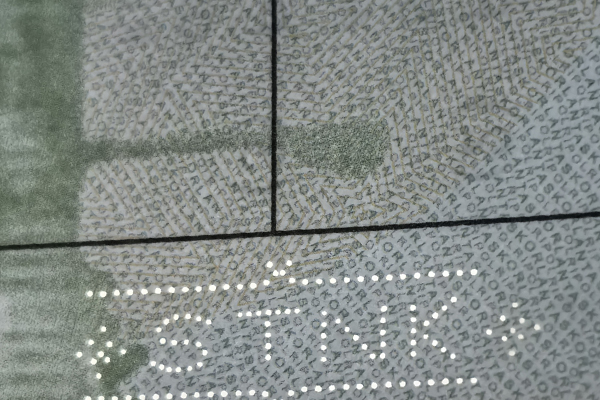
These features weaponize the very limitations of digital copying technology. A scanner or copier works by sampling an image into a grid of pixels. If the pattern is more complex than the scanner's resolution, the machine cannot capture it correctly. I love demonstrating this to clients. We take one of our sample certificates with a beautiful, fine-line guilloche border and try to photocopy it on a high-end office machine. The copy always comes out with ugly, blotchy areas and weird moiré patterns where the smooth lines should be. The demonstration proves the point instantly: our design breaks their machine.
The Hidden Secret of Microtext
Microtext is one of the most cost-effective and powerful security features you can add. We use special printing technology to print text that is less than 0.2mm high. To the naked eye, this text just looks like a simple line, often used as a signature line or a border. But when you look at it with a simple magnifying glass, you can clearly read the text. It might say "GENUINE DOCUMENT" or the name of the issuing authority over and over. A forger trying to replicate the document will see a simple line and draw a simple line. A scanner will see a fuzzy line and reproduce it as a fuzzy line. Only the original document has the clear, readable text when magnified.
The Mathematical Beauty of Guilloche
Guilloche patterns11 are those intricate, lace-like designs you often see on banknotes and high-security certificates. They are not random squiggles. They are generated by special software using mathematical formulas to create complex, non-repeating patterns of continuous, intertwined lines. The key is that the lines are incredibly fine and their patterns are very precise. When a digital scanner tries to capture this, its grid of pixels cannot accurately map the fine, curving lines. This forces the scanner's software to guess, resulting in a digital copy with visible flaws:
- Moiré Patterns: Ugly, wavy patterns that are not on the original.
- Broken Lines: The smooth, continuous lines of the original become dotted or broken.
- Blotchy Areas: Fine details merge into thick, blurry patches. This effect provides a built-in "authentication check" that instantly reveals a copy.
Conclusion
These security layers—embedded features, reactive coatings12, advanced optics, and intricate designs—work together to make your certificates verifiably authentic and forge-resistant, protecting your institution's integrity.
Discover how multi-tone watermarks provide a reliable method for verifying document authenticity. ↩
Watermarks offer a quick and reliable way to check document authenticity, crucial for preventing fraud. ↩
Explore how security threads woven into paper add a layer of complexity that deters forgers. ↩
Find out how invisible fibers that glow under UV light can help detect forged documents. ↩
Learn about chemical coatings that react to tampering attempts, providing clear evidence of forgery. ↩
UV invisible ink reveals hidden images or text under black light, adding a covert security layer. ↩
Microtext is a powerful security feature that is difficult for scanners to replicate accurately. ↩
Holograms offer a dynamic, multi-layered security feature that is difficult for forgers to replicate. ↩
OVI changes color with light angle, providing a visual security feature that is hard to counterfeit. ↩
Thermochromic Ink changes color with heat, offering a unique security feature against forgery. ↩
Guilloche patterns create intricate designs that are challenging for digital scanners to copy cleanly. ↩
Reactive coatings provide a visible response to tampering, ensuring the document's authenticity. ↩